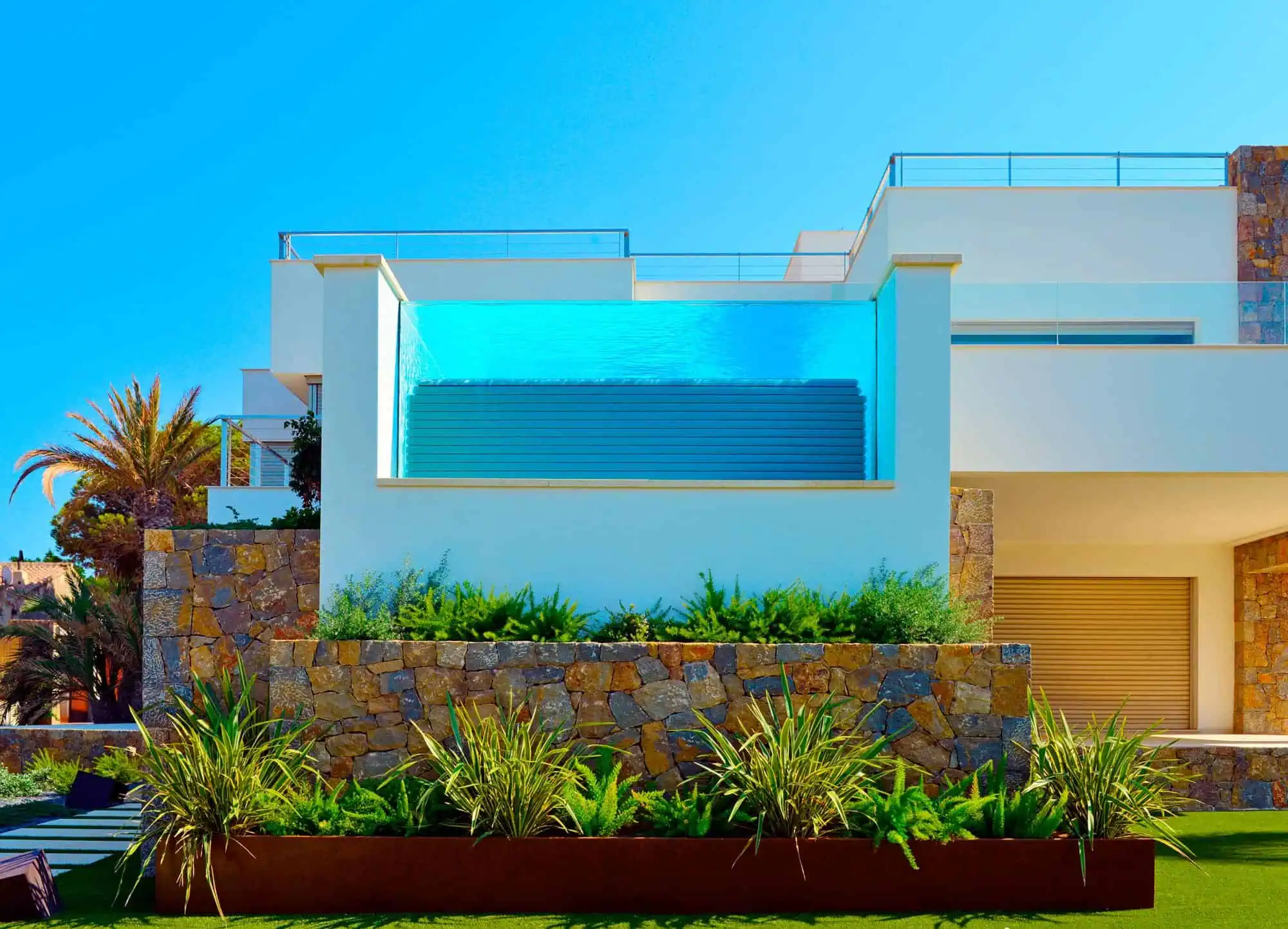
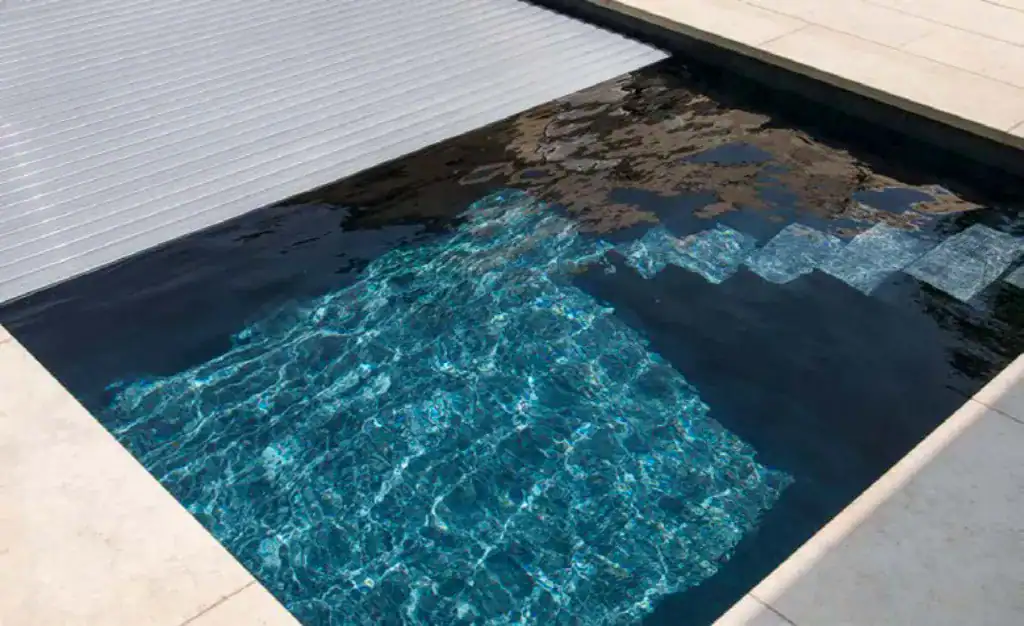
When it comes to pool covers, hardly any other term is used as imprecisely as ‘walkable’. As this concerns children’s safety, we’ll answer this question as thoroughly as it deserves.
This difference is not just a play on words; it is a matter of safety.
What the figures mean
The Design Cover PC and Design Cover PVC are designed to withstand a total load of 100 kg on the cover, whilst the Mini Cover is designed for 80 kg.
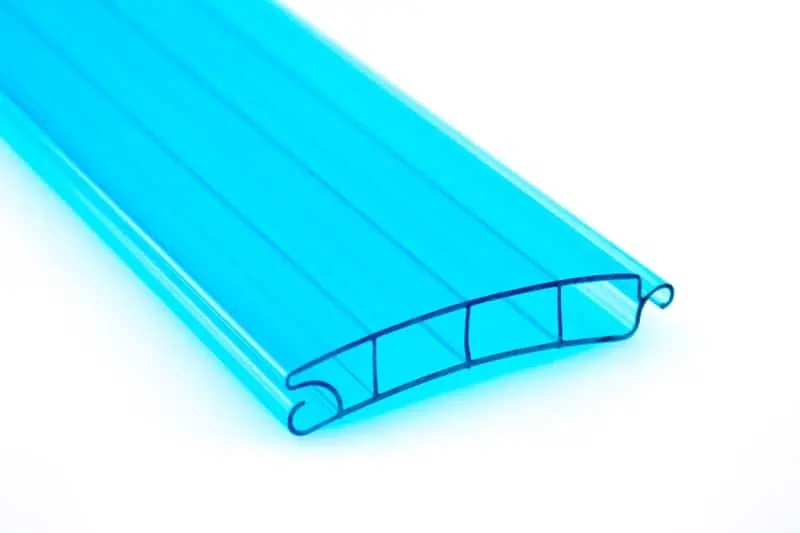
This is made possible by the design: multiple hollow chambers, a curved profile shape and a wall thickness of up to 1.45 mm — around 81 per cent more material than the 0.80 mm of the comparative profile we examined (not a comparison with the market as a whole). The chambers provide buoyancy, whilst the wall thickness ensures rigidity.
If an adult, a child or a pet falls onto the closed cover, the surface does not immediately give way.
The condition that is often kept quiet
This full load capacity is only achieved if the cover rests all the way round on a support edge or a handrail.
If this support edge is missing at the edge of the pool, the surface of the cover may give way at the sides when under load. In that case, the load capacity of the profiles is of little use — the surface gives way as a whole.
Anyone who sells you a cover as ‘child-safe’ without asking about the support structure at the edge of your pool has missed the point.
Why ‘walkable’ is the wrong word
A cover that bears a load is not a floor. It is a barrier above the water’s surface — designed to hold up in an emergency, not to be walked on.
Anyone who deliberately steps on it puts strain on the slats, the slat joints and the end caps in a way for which they are not designed. This can damage the cover — and if damaged, it may no longer provide protection in an emergency.
Our clear advice: Do not step onto the cover. Its load capacity is designed to improve accident protection — it is not intended for use as a walking surface.
No cover in the world can replace the duty of supervision for children near water.
A cover provides an additional barrier. It buys time in an emergency. It is no reason to be less vigilant — and it is no substitute for a fence, an alarm or supervision where these are required or advisable. Conversely, the same applies: even a pool fence can be climbed over, and an alarm may fail to work. Safety comes from a combination of measures, not just one.
We say this as a manufacturer who would rather sell a cover than hear about an accident.
How to recognise quality objectively
Anyone can make promises about security. The only way to verify them is through independent evidence:
All supporting documents: certifications and test reports.
Frequently Asked Questions
Is the cover child-proof?
It significantly improves safety — provided there is a continuous support edge around the pool. It is a barrier, not a guarantee of safety, and is no substitute for supervision.
Can I walk on it to clear away the leaves?
No. Use a landing net from the edge of the pool. Its load capacity is intended for emergencies, not for routine maintenance.
What happens if someone does step on it after all?
If supported correctly, the cover will hold in place — that is what it is designed to do. However, repeated stress may damage the slats, the slat joints and the end caps. Afterwards, visually inspect the cover for damage and report any abnormalities to the specialist contractor.
Does accident protection also apply in snowy conditions?
Snow load is a different type of load to point load. You can find out how to winterise your cover in our winter guide.